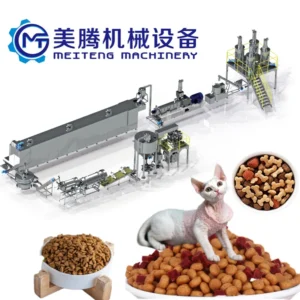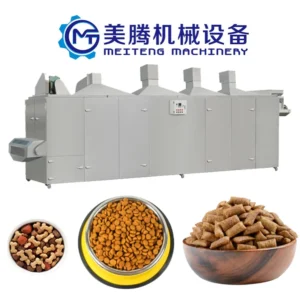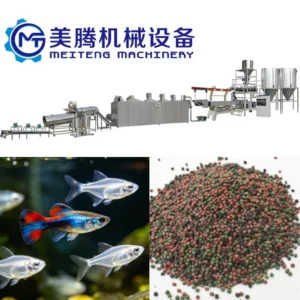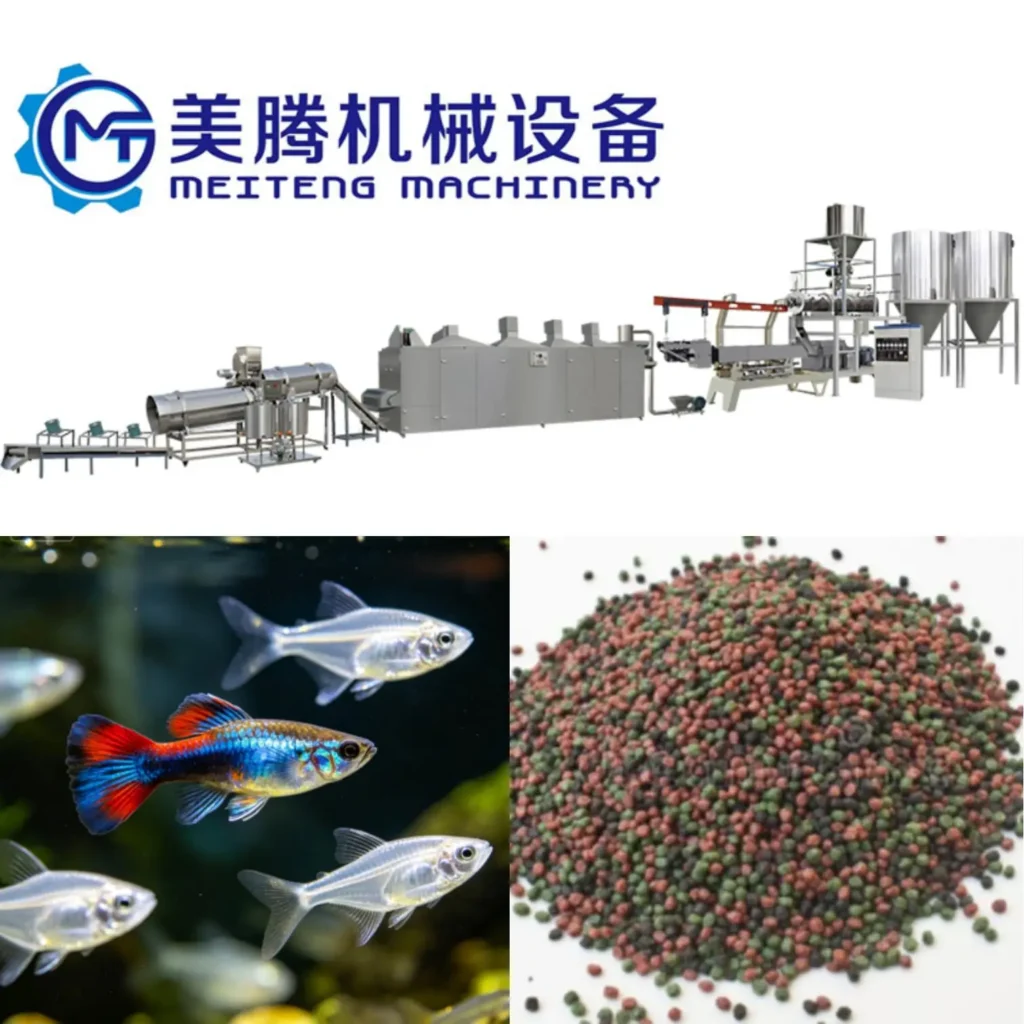
Throughput-Matched Engineering — every station in this fish feed processing line is sized against the extruder output so no single unit bottlenecks the run.
Technical Specifications
| Parameter | Value |
|---|---|
| Product Type | Fish Feed Extrusion Production Line |
| Output Capacity | 200–300 kg/h (basis not stated in source — confirm raw material formulation, moisture content and pellet diameter) |
| Extruder Type | Twin-screw extruder |
| Construction Material | 304 stainless steel (contact parts) |
| Line Stations | Mixing → Extrusion → Drying → Cooling → Packing |
| Control System | Available with PLC or MCC control (configuration to be confirmed) |
| Voltage & Frequency | Configurable to target market electrical standard |
| Certification | CE, ISO (scope to be confirmed for line configuration) |
Application Suitability
| Application | Material or Output |
|---|---|
| Floating pellets for trout and salmon | High-protein fish meal, starch binders, marine oil |
| Sinking pellets for catfish | Soybean meal, grain flour, vitamin premix |
| Starter crumbles for juvenile fish | Fine-ground protein blends with elevated lipid content |
| Multi-species grower feed | Variable protein-to-starch ratios requiring flexible screw configuration |
What "200–300 kg/h" Really Means on Your Recipe
Capacity only matters when it holds on the formulation you actually run through the barrel.
I have stood next to a line that was sold at a nameplate figure, only to watch output drop because the buyer’s recipe carried high-protein, high-viscosity material that the screw profile was never built for. [NEED_CITE: typical causes of extruder throughput shortfall in aquafeed production] When a fish feed processing line manufacturer quotes a number without tying it to your specific moisture, protein, and starch balance, that number is a ceiling, not a guarantee.
How Screw Geometry Shapes Pellet Density
The twin-screw extruder at the heart of this fish feed processing line accepts different screw element arrangements — forward-flight, kneading block, and reverse-pitch sections — each altering shear intensity and residence time. For floating trout pellets, a longer high-shear zone drives thorough starch gelatinisation so the pellet traps steam and expands at the die face. Sinking catfish pellets require a gentler profile that limits expansion and keeps density above water-level thresholds.
Barrel Zone Control and Moisture Management
Multiple independently heated barrel zones allow operators to stage temperature ramps that match raw material behaviour. Injecting steam or liquid at precise zones changes dough viscosity before it reaches the die. Getting this sequence wrong means pellets crack on cooling or collapse inside the dryer. [NEED_CITE: barrel temperature profiling standards in twin-screw aquafeed extrusion]
Why Die Aperture and Knife Speed Decide Your Pellet Size
Die hole diameter sets the starting cross-section, and the rotating knife determines cut length. A small change in either variable shifts pellet volume and therefore apparent density. When the target species requires a precise pellet diameter for automated feeders, the die and knife combination must be specified before the fish feed processing line manufacturer builds the machine, not adjusted on the factory floor afterward.
The Real Cost of Skipping a Trial Run
When no pre-shipment test is done on the buyer’s actual raw material, commissioning becomes a development exercise. I have seen lines sit idle while screw profiles were swapped, die plates re-drilled, and dryer temperatures re-mapped — all on the customer’s time and raw material cost. [NEED_CITE: hidden costs of post-installation process development in feed extrusion projects] Every day of adjustment is a day of lost production.
Why This Configuration Stands Up
Screw and die selection is locked to the buyer’s target pellet size, density, and float-sink requirement, not copied from a generic catalogue build. Every downstream station — dryer, cooler, packing — is matched to the extruder throughput so no single unit chokes the run. Food-grade 304 stainless steel contact surfaces resist the corrosive salts and fish oils common in aquafeed. The in-house testing workshop runs the buyer’s raw material before dispatch, generating a documented trial report rather than leaving validation to on-site guesswork. PLC or MCC control is available to store process parameters, keeping batch-to-batch results consistent.
Documentation & Verification
- Line layout drawing with per-station throughput matched to your recipe
- Trial run report produced on your raw material before shipment
- Screw and die configuration record for your target pellet density
- Electrical schematic with voltage and frequency locked to your market standard
- CE declaration of conformity covering the full line scope
Installation, Commissioning & Support
- Utility plan specifying power draw and dedicated circuit sizing for the extruder motor
- Foundation layout matching the twin-screw extruder footprint and vibration load
- Control panel configured to local voltage, frequency, and operator language before dispatch
- On-site commissioning with parameter tuning to your actual raw material formulation
- Wear parts list covering screws, dies, and knife blades with reorder references
What We Need From You to Size the Line
Share the raw material formulation — protein, starch, fat, and moisture percentages — along with the target pellet diameter and whether you need floating or sinking output. Confirm the local voltage and frequency standard, plus the preferred control language for the PLC interface. If you have existing upstream mixing or downstream packing equipment, provide model and throughput details so the fish feed processing line can be matched to what is already on your floor.
Frequently Asked Questions
Q: How is the 200–300 kg/h capacity verified against my specific raw material formulation?
A: Before shipment, your actual raw material is run through the extruder in the in-house testing workshop. Throughput is measured at steady state, and the result is documented in a trial run report. If the figure falls below target, screw configuration or barrel settings are adjusted and retested until output stabilises on your recipe.
Q: What screw and die configuration is recommended for floating versus sinking fish feed pellets?
A: Floating pellets need a screw profile that delivers high shear and full starch gelatinisation, paired with a die that allows expansion at the exit face. Sinking pellets use a gentler screw arrangement and a tighter die to limit expansion and hold density above water level. The exact element layout is matched to your formulation.
Q: How are the dryer and cooler capacities matched to the extruder output to prevent line bottlenecks?
A: Each station is calculated against the extruder’s steady-state throughput on your material. Dryer belt length and airflow are sized to handle the moisture load, and the cooler volume is set so pellets reach packing temperature without queuing. This matching is confirmed in the line layout document.
Q: Is a trial run on my raw material performed before shipment, and what documentation is provided?
A: Yes. The testing workshop runs your raw material through the configured extruder and records throughput, pellet density, and dimensional consistency. You receive a trial run report along with the screw and die configuration record, so you can replicate results immediately after installation.