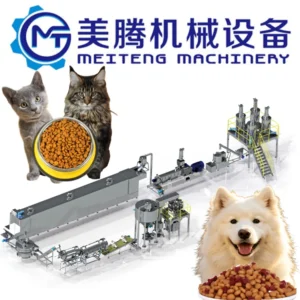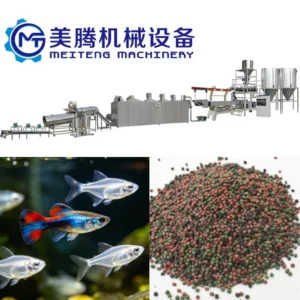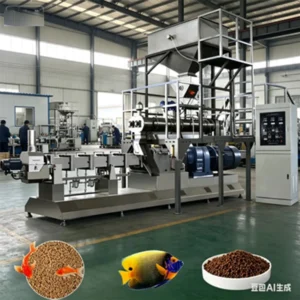
Turnkey Line Integration — Every station from batching to packaging is matched by a single supplier, eliminating throughput mismatches that stall production.
Technical Specifications
| Parameter | Value |
|---|---|
| Product Type | Twin Screw Aquatic Fish Feed Extrusion Production Line |
| Extruder Type | Twin screw |
| Screw Configuration | Twin screw, interchangeable segments |
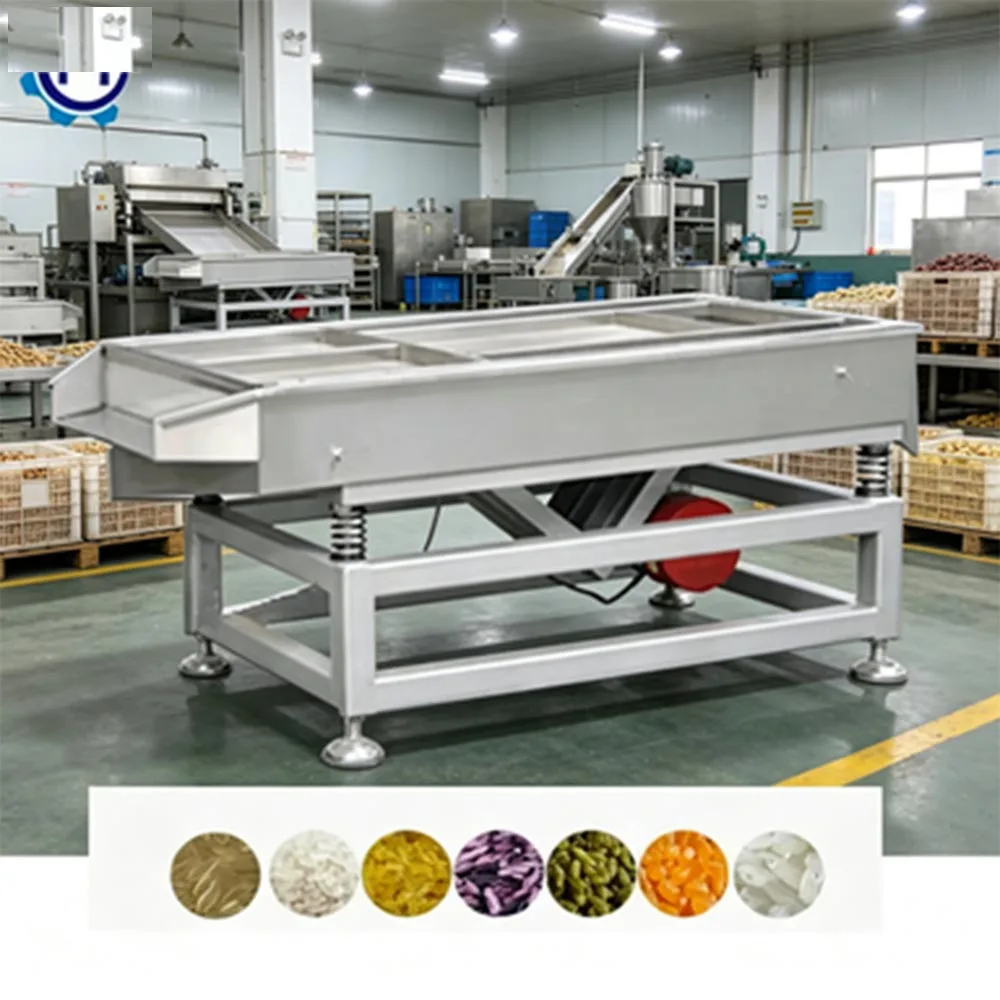
| Line Stations | Raw material mixer, extruder, dryer, seasoning coating machine, vibrating sieve, conveyor equipment |
| Control System | PLC automatic control system |
| Automation Level | Full continuous automatic production from mixing to finished product discharging |
| Contact Material | Food grade 304 stainless steel |
| Pellet Buoyancy | Adjustable for floating and sinking formats |
| Pellet Customization | Size, hardness, and buoyancy adjustable via screw profile and die selection |
| Target Species | Koi, goldfish, tropical fish, freshwater fish |
| Raw Materials | Fish meal, soybean meal, corn powder, compound additives |
| Processing Conditions | High temperature and high pressure |
| Production Scale | Medium to large scale industrial commercial operation |
| Output Capacity | Continuous long-time uninterrupted operation (basis not stated in source) |
| Assembly State | Complete matched production configuration |
| Certification | CE (source value — verify against manufacturer catalog) |
Application Suitability
| Application | Material or Output |
|---|---|
| Commercial floating fish feed | Corn powder and fish meal blends for koi and tilapia farming |
| Sinking aquatic pellets | High-protein soybean meal and compound additive formulations |
| Tropical ornamental fish feed | Small-diameter buoyant pellets from mixed grain and protein bases |
| Freshwater aquaculture nutrition | Variable-density pellets adjusted for catfish and carp species |
| Multi-species feed production | Alternating floating and sinking batches on the same line with die and screw changes |
Why Density Specification Determines Line Viability
Floating feed that sinks destroys buyer trust faster than any other defect in the aquatic feed market.
When I first started configuring lines for aquaculture clients, I watched a producer lose an entire regional contract because their floating pellets sank within minutes of hitting the water. The extruder was running, the dryer was hot, and the coating drum was turning — but the screw configuration had been copied from a generic pet food setup rather than specified for their high-starch formulation. The aquatic fish feed extrusion production line for sale looked complete on paper, yet the core extrusion parameters were never matched to the raw material behavior under high-temperature, high-pressure conditions [NEED_CITE: raw material gelatinisation thresholds in twin-screw extrusion]. Density control starts at the screw profile and die geometry, not at the packaging station.
Station Matching Across the Full Line
A complete aquatic fish feed extrusion production line for sale moves material through mixing, extrusion, drying, seasoning, screening, and conveying. When each station is sourced from a different vendor, the extruder may produce at a rate the dryer cannot handle, creating a wet-product bottleneck that forces the entire line to slow down. Matching throughput at the design stage means the dryer residence time, coating drum speed, and vibrating sieve capacity all align with the extruder output profile, so continuous operation stays uninterrupted across every shift.
Screw and Die Specification for Buoyancy Control
Whether the target product floats or sinks depends on the expansion ratio inside the barrel, which is governed by screw segment arrangement, barrel temperature zoning, and die orifice diameter. A screw profile designed for sinking pellets compresses material differently than one configured for maximum expansion in floating feed. Die design further controls the pellet cross-section and density at the point of extrusion, making the screw-and-die combination the primary variable for buoyancy specification [NEED_CITE: twin-screw extrusion die design principles for expanded products].
Reading the Specifications That Actually Matter
The twin-screw configuration provides the shear and mixing intensity needed to fully gelatinise starch from corn powder and soybean meal under high-temperature, high-pressure processing. Food grade 304 stainless steel contact surfaces resist corrosion from the moisture and acidic additives common in aquatic formulations. The PLC automatic control system maintains consistent barrel temperature profiles and screw speed across long production runs, which is what keeps pellet density within specification from the first hour to the last. Without automated control, manual adjustments introduce drift that accumulates into off-spec product over a full shift.
What Happens When the Dryer Is Undersized
An undersized dryer forces the line to slow the extruder feed rate, cutting actual output below the quoted capacity. Wet pellets entering the coating drum absorb seasoning unevenly, and the vibrating sieve cannot separate clumped material efficiently. I have seen lines where the extruder was rated correctly but the dryer could not remove enough moisture, so pellets left the line above the storage-safe threshold and developed mold within days of bagging [NEED_CITE: moisture content limits for stored aquatic feed pellets]. The problem is never visible at the factory test when the dryer is running empty — it only appears under full production load.
Why Buyers Choose This Configuration
The entire line from raw material mixer through conveyor equipment is supplied and matched by one source, so throughput calculations are verified across every station before the layout is finalised. Screw configuration and die design are specified against the buyer’s actual formulation — not a generic template — so buoyancy and pellet size are set before the machine ships. The PLC control system is configured with the correct voltage, frequency, and operator language for the destination market, preventing commissioning delays. Every aquatic fish feed extrusion production line for sale goes through a trial run on the buyer’s raw material in the testing workshop, producing a documented report that confirms output behavior before the equipment leaves the factory.
Documentation & Verification
- Line layout drawing with throughput calculation matched to your raw material formulation
- Screw and die configuration record specifying buoyancy target and pellet dimensions
- Trial run report from testing workshop using your actual fish meal and corn powder blend
- Electrical schematic confirming voltage, frequency, and PLC language for your market
- CE declaration of conformity with full machine directive compliance (source value — verify)
- Operation and maintenance manual covering all stations from mixer to vibrating sieve
Installation, Commissioning & Support
- Foundation plan sized to the full line footprint including dryer and coating drum clearance
- Electrical supply specification matching the PLC panel voltage and motor circuit requirements
- Modular station delivery allowing sequential assembly from mixer through extruder to packing end
- First-run commissioning with screw speed and barrel temperature profiling for your formulation
- Operator training covering PLC interface navigation and buoyancy adjustment procedures
- Wear parts inventory list specifying screw segments, die plates, and mixer blade replacements
Before You Send the Inquiry
Provide your raw material formulation including the fish meal percentage and any compound additives, along with the target pellet diameter and whether you need floating, sinking, or both formats. Confirm your local voltage and frequency standards, the available workshop floor area and ceiling height, and whether existing upstream or downstream equipment needs to integrate with the new line. If you need a trial run on your specific blend before commitment, include a raw material sample shipment plan with the inquiry.
Frequently Asked Questions
Q: How is the output capacity of the aquatic fish feed extrusion production line verified?
A: Capacity depends on the raw material formulation, pellet diameter, and whether the product floats or sinks. The line is rated for continuous long-time uninterrupted operation, but the actual throughput is confirmed only after a trial run on your specific blend in the testing workshop, where screw speed and die selection are finalised.
Q: How is screw configuration matched to my aquatic feed formulation?
A: The screw segment arrangement and die design are selected based on your raw material’s starch content, protein level, and target buoyancy. A trial run on your actual formulation validates the configuration before shipment, and the complete screw-and-die record is documented for future reference and reordering.
Q: What electrical specifications are confirmed before the line ships?
A: Voltage, frequency, and PLC control language are confirmed during the specification stage based on your local standards. The electrical schematic is provided for review before production, ensuring the motor circuits and control panel match your facility’s power supply without requiring on-site transformers.
Q: Is a trial run performed before the line is shipped?
A: Yes. A full trial run is conducted in the testing workshop using your raw material sample. The resulting report covers pellet density, buoyancy behavior, dimensional consistency, and throughput observation, so product development begins before installation rather than after.
Q: How are throughput rates balanced between stations?
A: Each station — mixer, extruder, dryer, coating drum, and vibrating sieve — is sized so its processing rate matches the extruder output. The line layout document shows the throughput calculation for every station, preventing bottlenecks that would otherwise force the entire line to run below capacity.