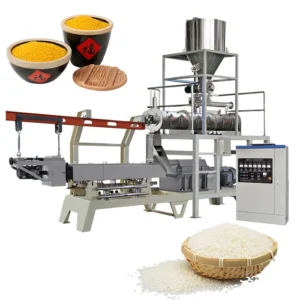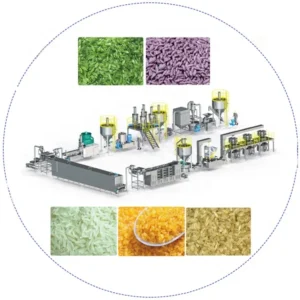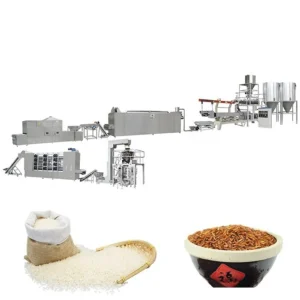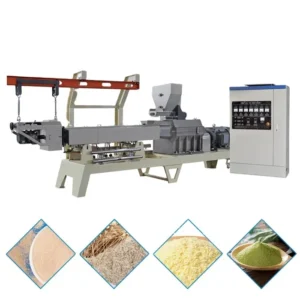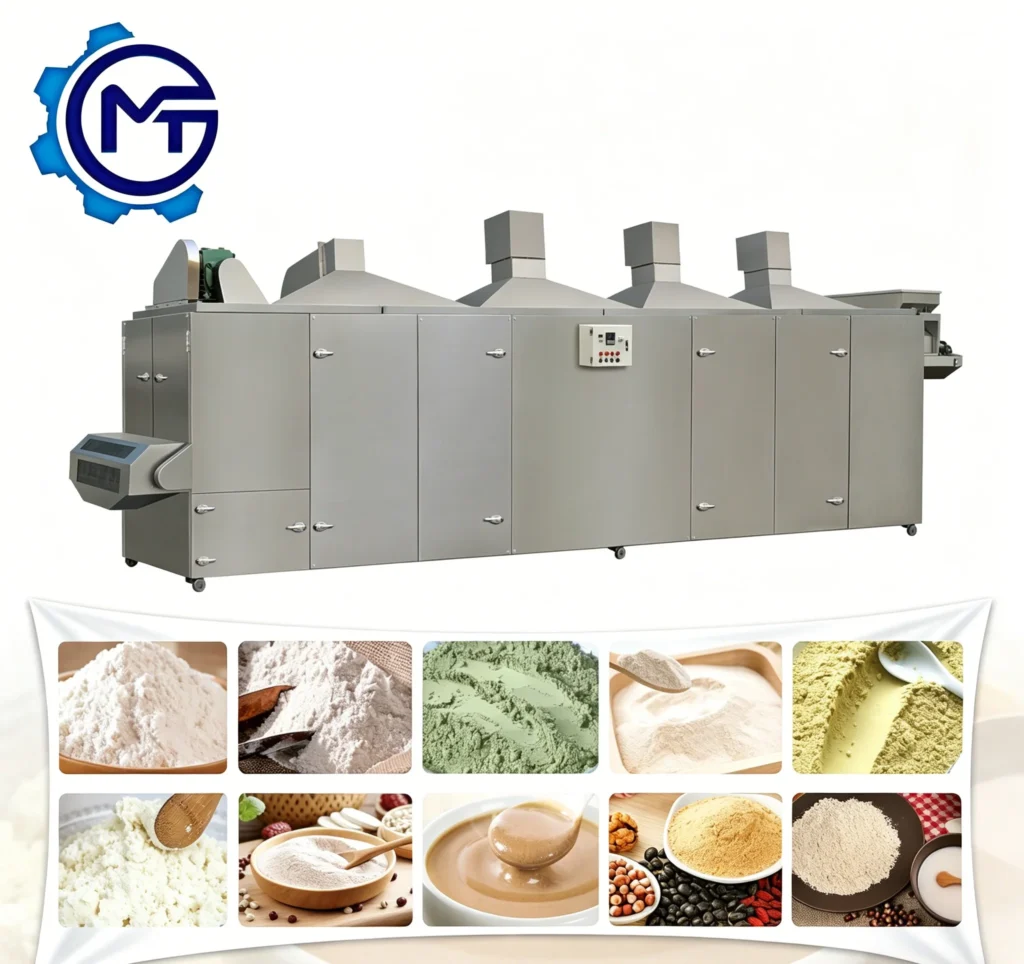
Throughput Matching Across Stations — every mixer, extruder, dryer, and packing unit in this nutrition powder processing line is sized against the same formulation data so no single station chokes the flow.
Technical Specifications
| Parameter | Value |
|---|---|
| Product Type | Nutrition Powder Processing Line |
| Output Capacity | 200–500 kg/h (basis not stated in source — confirm raw material formulation and moisture content) |
| Construction Material | Food-Grade 304 Stainless Steel |
| Control System | Touch Control Panel with Digital System |
| Heat Source Options | Electric, Gas, or Steam |
| Line Stations | Mixer, Extruder, Baking Oven, Dryer, Flavouring, Packing (full configuration to be confirmed) |
| Certification | CE, ISO |
| Warranty | 1 Year |
| After-Sales Support | Overseas Engineer Service Available |
Application Suitability
| Application | Material or Output |
|---|---|
| Infant nutrition powder production | Rice, corn, and oat blends with added whey protein or milk powder |
| Fortified nutritional porridge | Multi-grain formulations including soybean, millet, and sorghum |
| Grain-based baby food powder | Pre-cooked rice and corn flour with vitamin and mineral premix |
| Instant health drink powder | Bean, seed, and pseudocereal blends requiring gelatinisation |
Why Dryer Sizing Matters More Than Extruder Capacity on a Nutrition Powder Processing Line
An extruder that outpaces its dryer creates a wet-product bottleneck that no amount of motor power can fix.
Buyers often compare extruders by barrel diameter and motor kilowatts, then treat the dryer as an afterthought. On a baby food line running sticky, protein-enriched formulations, the drying residence time can double compared to plain starch extrusion. I once watched a Southeast Asian plant run their extruder at half speed because the downstream oven could not remove moisture fast enough — the nutrition powder processing line manufacturer had quoted the extruder on rice flour but the buyer added whey protein concentrate, which holds water differently [NEED_CITE: moisture retention behaviour of whey protein in extruded cereals]. The line physically ran, but effective output dropped to a fraction of nameplate figures. Confirming dryer bed area and airflow against your actual formulation prevents this mismatch before steel is cut.
Mapping Every Station Before the First Bolt Goes Down
When you survey equipment for a nutrition powder processing line, the extruder naturally draws the most attention. Yet the batching accuracy of the mixer determines whether vitamin premix hits label claims, and the cooling conveyor length decides if powder reaches the packing station below the moisture threshold that causes caking. Each station must be evaluated as part of a continuous material flow rather than as isolated machines. This catalogue approach lets technical buyers see the full sequence — mixing, extrusion, drying, flavouring, cooling, packing — and flag stations where throughput or utility requirements diverge from factory conditions.
How Formulation Changes Reshape the Equipment List
A switch from pure rice flour to a blend containing fifteen percent whey protein alters screw configuration, barrel temperature profile, and drying curve simultaneously. The extruder needs higher shear to break down protein aggregates, the die geometry must accommodate increased melt viscosity, and the oven requires longer residence time at controlled humidity. Without a shared specification document that traces formulation changes through every station, one department may order a larger extruder while another keeps the original dryer [NEED_CITE: effect of protein content on extrusion melt viscosity and drying kinetics]. Reviewing the complete station list against your target recipe ensures all adjustments propagate across the line, not just at the extruder.
Reading the Specification Sheet Beyond the Headline Numbers
Output capacity listed at 200–500 kg/h means different things depending on whether the basis is plain rice grits at low moisture or a fortified blend carrying added fats and proteins. Food-grade 304 stainless steel contact surfaces resist the mild acidity common in fruit-fortified infant powders and simplify wash-down between recipe changeovers. The touch control panel with digital system stores recipe parameters — barrel zone temperatures, screw speed, feeder rates — so batch-to-batch variation stays within the narrow window infant food standards require. Heat source flexibility across electric, gas, and steam lets the dryer and oven integrate with whatever utility the factory already has on tap, avoiding costly new boiler installations.
The Cost of Skipping the Trial Run
Sending a sample of your exact raw material to the manufacturer’s testing workshop feels like a delay when you want machines on a ship. But running that material reveals whether the standard screw profile generates enough shear to gelatinise your particular starch-protein matrix, or whether the die produces the particle size your packing machine expects. Skipping this step means discovering formulation incompatibilities during on-site commissioning, when engineer travel costs and production downtime compound every hour the line sits idle [NEED_CITE: cost of post-installation line modification versus pre-shipment testing]. A trial run report documenting throughput, product density, and moisture content at each station gives you a baseline to hold the final installation against.
What Distinguishes This Equipment Source
Complete line supply from a single source means the mixer discharge rate, extruder throughput, dryer capacity, and packing speed are calculated against one another rather than assembled from separate vendor catalogues. Screw configuration and die design are specified to the buyer’s raw material and target powder granularity, not copied from a generic build. The in-house testing workshop allows trial runs on customer-supplied material before any machine leaves the factory. Twin-screw expertise covers the range from pure starch gelatinisation for rice porridge to high-protein infant formula extrusion. Pre-sales consultation extends through line layout, utility planning, installation supervision, and operator training.
Documentation & Verification
- Line layout drawing showing throughput calculation at every station from mixer to packer
- Machine specification sheet detailing utility requirements for each dryer heat source option
- Screw and die configuration record matched to buyer’s grain formulation and target particle size
- Trial run report documenting output and moisture data on customer-supplied raw material
- CE declaration of conformity and ISO certificate covering manufacturing and quality systems
- Operation and maintenance manual with wear parts list specific to the extruder screw elements
Installation, Commissioning & Support
- Foundation plan accounting for extruder vibration isolation and dryer weight when fully loaded
- Dedicated electrical circuit sized for the combined extruder motor and electric heating elements
- Modular dryer sections shipped disassembled for container loading, bolted and sealed on site
- First-run parameter logging on the touch control panel to establish baseline recipe settings
- Operator training covering screw element replacement intervals and barrel liner inspection
- Wear parts inventory including screw flights, die inserts, and dryer belt sections for the first year
What to Include With Your Enquiry
Share your target formulation — the grain base, protein additions, fat percentage, and any vitamin premix — along with the daily output you need to hit. Confirm your factory’s available voltage, frequency, and whether steam, gas, or electric heating suits existing utility infrastructure. If you already run upstream milling or downstream packing equipment, provide their throughput and connection dimensions so the nutrition powder processing line manufacturer can match station interfaces without guesswork.
Frequently Asked Questions
Q: What stations are included in the full nutrition powder processing line and how is throughput matched?
A: The line covers batching and mixing, twin-screw extrusion, drying or baking, cooling, optional flavouring, and packing. Each station’s capacity is calculated against your formulation’s moisture content and density so material flows continuously without one machine waiting on another. A line layout document shows the matched throughput figures before order confirmation.
Q: How do I confirm the correct extruder model and screw configuration for my grain formulation?
A: Submit your raw material recipe including grain type, protein level, and fat content. The manufacturer selects screw element geometry and die aperture based on the shear and pressure your formulation requires, then validates this in a trial run. You receive a configuration record documenting every screw element position.
Q: Which heat source option fits my factory’s existing utility setup?
A: The dryer and oven stations accept electric, gas, or steam heating. Provide your available supply — boiler pressure for steam, gas line diameter and pressure, or electrical service amperage — and the line specification will assign the heat source that avoids new utility construction while meeting the drying curve your product demands.
Q: What food-grade certifications and documentation are provided for each machine in the line?
A: All product contact surfaces use food-grade 304 stainless steel, documented in material certificates. The line carries CE and ISO certification. You receive a declaration of conformity, factory test records, and a complete operation manual covering hygiene and cleaning procedures specific to infant food production requirements.
Q: How do I plan the factory footprint and utility connections before ordering the full equipment set?
A: Request the line layout drawing that shows each station’s footprint, service connection points, and required clearances for maintenance access. This document includes electrical load schedules, steam or gas consumption figures, and ventilation requirements so your contractor can prepare utility drops before machines arrive on site.