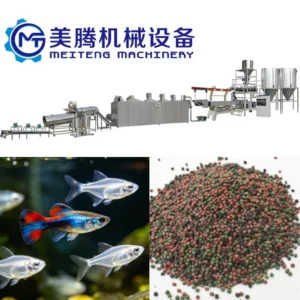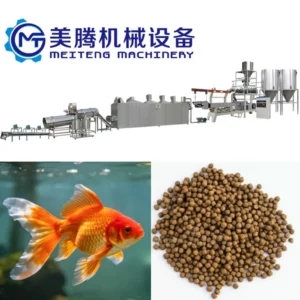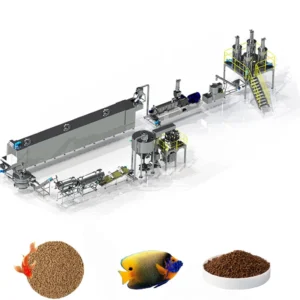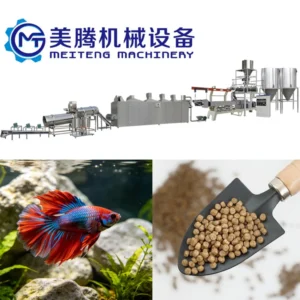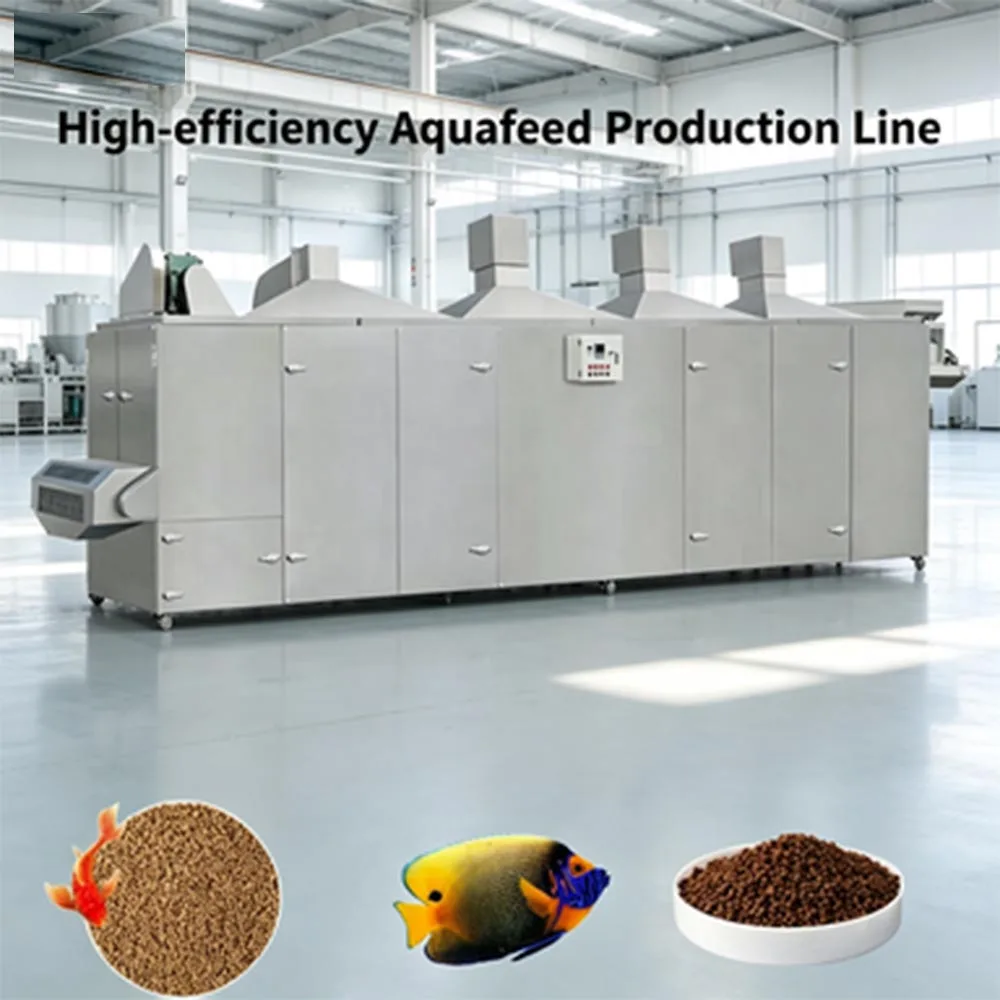
Throughput Matched Across Stations — Every dryer section is configured to the extruder output and target moisture, preventing the bottleneck that happens when drying capacity lags behind pellet production.
Technical Specifications
| Parameter | Value |
|---|---|
| Product Type | Fish Feed Pellet Dryer |
| Dryer Structure | Continuous Tunnel Type |
| Contact Material | Food Grade 304 Stainless Steel |
| Control System | PLC Automatic Control |
| Operating Mode | Continuous, uninterrupted operation |
| Energy Design | Optimized transmission and heating structure |
| Corrosion Resistance | Anti-rust treated for humid processing environments |
| Output Capacity | Medium to large scale industrial production (basis to be confirmed with raw material moisture and pellet size) |
Application Suitability
| Application | Material or Output |
|---|---|
| Floating aquaculture feed | Fish meal, soybean meal, corn powder with compound additives |
| Sinking aquaculture feed | High-protein formulations for bottom-feeding species |
| Ornamental fish feed | Pellets for koi, goldfish, and tropical fish |
| Freshwater fish feed | Catfish and tilapia kibble at commercial scale |
Why a Mismatched Fish Feed Pellet Dryer for Sale Wastes Extruder Output
The dryer must handle exactly what the extruder produces, at the moisture level the pellet requires.
A common failure on aquatic feed lines is an extruder running at full capacity while the dryer section falls behind, leaving wet pellets stacking up on conveyors or entering the coating drum too soft to hold seasoning. I have seen lines where the Fish Feed Pellet Dryer for sale was specified by footprint rather than throughput, and the result was product spoilage before it ever reached the packing station. When floating feed retains too much internal moisture, it sinks in the water column and fails the field test that farmers rely on [NEED_CITE: floating versus sinking pellet density standards in aquaculture]. The dryer has to be calculated against the extruder discharge rate, the starting moisture of the pellet, and the final moisture target for shelf stability.
How Tunnel Airflow Controls Pellet Integrity
The continuous tunnel structure moves pellets through multiple temperature zones on a stainless steel belt, allowing moisture to leave the pellet gradually rather than shocking the surface with intense heat. This staged approach preserves the internal cell structure that gives floating feed its buoyancy. A Fish Feed Pellet Dryer for sale with properly zoned heating prevents case hardening, where the outside of the pellet dries fast and traps steam inside, leading to cracking during cooling or storage.
Balancing Heat Input with Line Speed
The PLC automatic control system links dryer belt speed and zone temperatures to the upstream extruder output. When the extruder increases throughput or switches to a higher-moisture formula, the control adjusts residence time and heat delivery without manual intervention. This integration matters on aquatic feed lines where a formula change from floating koi feed to sinking catfish pellets shifts both the pellet density and the moisture load entering the dryer [NEED_CITE: PLC integration across extrusion and drying stations in feed processing]. The food grade 304 stainless steel contact surfaces handle the salt and protein residues common in fish meal formulations without corrosion buildup that would otherwise contaminate subsequent batches.
Reading the Specs That Determine Drying Performance
The continuous tunnel configuration means pellets travel a fixed path length; the belt speed determines how long each pellet stays in the heated zone. Residence time directly controls final moisture content. The food grade 304 stainless steel construction across the machine body and material contact parts is not a cosmetic choice — fish meal and compound additives leave chloride and protein deposits that corrode standard carbon steel within months in a humid drying environment. The PLC automatic control system replaces manual damper and thermostat adjustments, holding zone temperatures within a narrow band so that pellet moisture stays consistent from the first minute of a shift to the last. The optimized energy saving transmission structure reduces heat loss through the tunnel shell, directing more thermal energy into the product bed rather than the surrounding workshop air.
What Happens When the Dryer Is Undersized
An undersized dryer forces the operator to slow the entire line to match drying capacity, meaning the extruder runs below its rated output and the return on the extrusion investment drops. Alternatively, the operator keeps the extruder at full speed and pushes wet pellets through to the seasoning drum, where coating powder clumps on damp surfaces and the vibrating sieve cannot separate agglomerates. On floating feed lines, insufficient drying leaves internal moisture that causes pellets to sink during use, generating complaints from farmers who judge feed quality by water column behavior [NEED_CITE: field rejection rates for sinking pellets in commercial aquaculture].
Why Procurement Should Start with Line Layout
Every station on this line — raw material mixer, extruder, dryer, seasoning coating machine, vibrating sieve, conveyor equipment — is specified under one supplier so that throughput calculations are matched before fabrication. The dryer section is not selected from a catalogue page; it is sized against the extruder discharge rate and the moisture differential between wet pellet and finished product. Pre-sales consultation includes line layout and capacity calculation that show the mass balance across each station, so the buyer sees where material flows and where the constraint sits before any steel is cut.
Documentation & Verification
- Line layout drawing with throughput calculation matched to your extruder output and pellet moisture target
- Machine specification sheet confirming voltage, frequency, and PLC language before production begins
- Trial run report on your actual fish meal and additive formulation in the testing workshop
- Wear parts list identifying belt sections, heating elements, and seals with replacement intervals
- Operation and maintenance manual written for your operator language
Installation, Commissioning & Support
- Foundation plan reflecting tunnel length and weight distribution for level installation on concrete slab
- Dedicated electrical circuit sized for PLC control panel and heating zone power draw
- Modular tunnel sections shipped disassembled and bolted on site to fit standard container loading
- First-run parameter setting linking belt speed and zone temperatures to your extruder discharge rate
- Operator training covering formula changeover between floating and sinking pellet drying profiles
- Spare belt sections and heating elements supplied with initial shipment for first replacement cycle
What to Prepare Before Requesting a Quotation
To configure the dryer section accurately, share your extruder model and its rated discharge rate, the starting moisture of your wet pellets, and the final moisture target for your market. Confirm your workshop voltage and frequency, the available floor length for the tunnel footprint, and whether the PLC interface should match an existing line language. If you are adding this dryer to an operating extrusion line, note the conveyor discharge height so the infeed transition aligns without modification.
Frequently Asked Questions
Q: How is dryer capacity matched to extruder throughput and target pellet moisture?
A: We calculate the moisture load by subtracting the target final moisture from the wet pellet moisture at extruder discharge, then multiply by the extruder output rate. The tunnel length, belt speed, and zone temperatures are set so that the residence time removes that moisture load continuously, without slowing the extruder or leaving pellets above the storage threshold.
Q: What voltage, frequency, and control language options are confirmed before shipment?
A: The electrical schematic and PLC configuration are confirmed against your workshop supply before production. This covers main power voltage and phase, control circuit voltage, HMI language, and any communication protocol needed to link the dryer PLC to an existing line control system so that commissioning starts with correct parameters.
Q: Which line stations are included and how is throughput balanced across them?
A: The full configuration covers raw material mixer, extruder, dryer, seasoning coating machine, vibrating sieve, and conveyor equipment. Each station is sized so its maximum throughput exceeds the extruder output by a defined margin, preventing any single station from becoming the constraint that limits line capacity.
Q: Is a trial run on customer raw material available before shipment?
A: Yes. You send your actual fish meal, soybean meal, and additive blend to the testing workshop, and we run the dryer on that material before dispatch. The trial confirms that the moisture reduction meets your specification and generates a test report that travels with the shipment.
Q: What spare wear parts are supplied and how is ongoing maintenance supported?
A: The initial shipment includes belt sections, heating elements, and seals identified in the wear parts list with expected replacement intervals. The operation manual covers inspection schedules, and replacement parts are available for reorder against the original configuration record so that fit and material grade remain consistent.