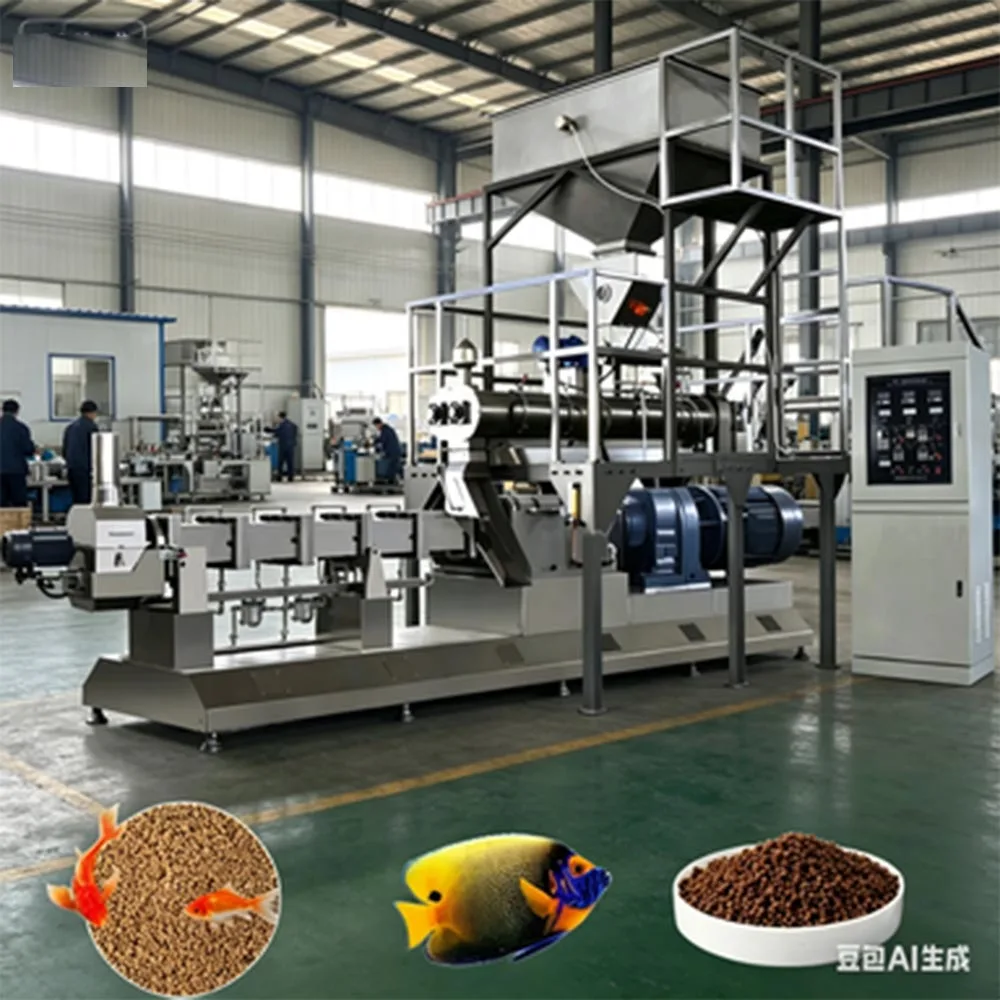
Capacity Matching Expertise — every drying station is sized to the line’s actual extruder output rather than selected from a generic catalogue, ensuring throughput is synchronized across all stations in your aquatic feed production.
Technical Specifications
| Parameter | Value |
|---|---|
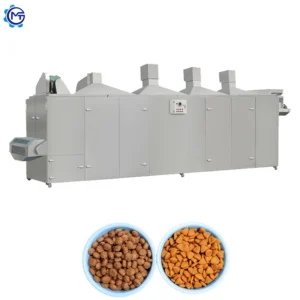
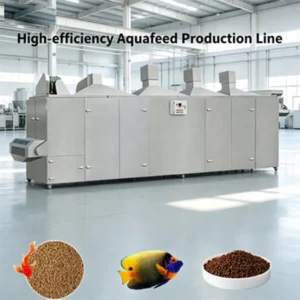
| Product Type | Multi-Layer Mesh Belt Dryer for Aquatic Feed Pellets |
| Construction Material | Food-grade 304 stainless steel (body and material contact parts) |
| Control System | PLC automatic control, integrated with full-line MCC |
| Heating System | Optimized energy-saving transmission structure and heating system (heating method — electric, steam, or gas — basis to be confirmed) |
| Operation Mode | Continuous, uninterrupted industrial operation |
| Capacity Range | Matched to upstream extruder throughput (basis to be confirmed based on pellet diameter, moisture inlet/outlet, and line extruder output) |
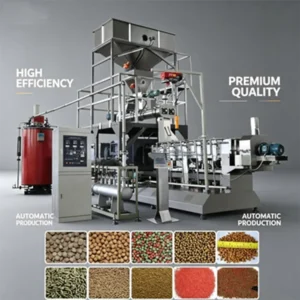
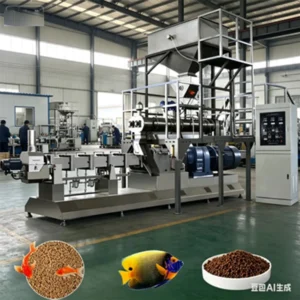
| Integration Scope | Raw material mixer, twin-screw extruder, seasoning/coating machine, vibrating sieve, conveyor |
| Maintenance Design | Quick replacement of vulnerable parts, convenient daily cleaning |
| Hygiene Standard | International food hygiene compliant construction |
| Certification | CE (since 2014), ISO certified |
Application Suitability
| Application | Material or Output |
|---|---|
| Floating fish feed pellet drying post-extrusion | Starch-based formulations with fish meal, soy protein concentrate |
| Sinking aquatic feed production | High-protein formulations for catfish, tilapia, shrimp |
| Ornamental fish feed lines | Koi and goldfish pellets with colorant additives |
| Tropical fish feed mass production | Premium extruded pellets requiring controlled moisture removal |
| Turnkey aquatic feed plant drying station | Integrated into twin-screw extrusion lines from mixer through packing |
Why Dryer Sizing Decides Whether Your Line Actually Runs at Quoted Output
A dryer that is spec’d in isolation will either bottleneck your extruder or waste thermal energy on underutilized belt area.
I have watched plants invest in a high-output twin-screw extruder only to find the downstream drying stage could not keep pace — wet pellets backing up on the conveyor, moisture leaving the product above specification, and the entire line idling while the belt catches up [NEED_CITE: extrusion line throughput balancing principles for aquatic feed]. The multi layer drying oven for aquatic feed line must be calculated against the actual extruder discharge rate on the buyer’s specific raw material formulation, not against a nominal catalogue figure. This fish feed pellet dryer is selected as a matched station within the complete line, so belt width, layer count, and residence time are configured to hold the throughput that the upstream extruder delivers.
Belt Layers and Residence Time for Aquatic Pellets
Multi-layer mesh belt construction extends the pellet travel path within a compact footprint, giving the hot air sufficient contact time to draw moisture from the pellet core to the surface uniformly. The fish feed pellet dryer uses this layered arrangement to handle both floating and sinking formulations, where target outlet moisture differs between product types. Each layer allows redistribution of pellets, preventing clumping and ensuring that thermal exposure is consistent across the full belt width.
Stainless Steel Contact Surfaces for Feed Hygiene Compliance
All material contact surfaces are constructed from food-grade 304 stainless steel, which resists corrosion from the high-humidity environment inside the drying chamber and meets international feed hygiene standards. The stainless construction also simplifies washdown between production runs when switching between floating and sinking formulations. This matters on lines that produce multiple pellet types in a single shift, where cross-contamination between batches must be controlled [NEED_CITE: food-grade stainless steel requirements for feed processing equipment].
Heating System Layout and Thermal Efficiency
The optimized heating system and transmission structure are designed to reduce thermal loss across the drying chamber. Hot air circulation is distributed through each mesh belt layer so that pellets receive uniform heat rather than being over-dried on the surface while remaining wet internally. The heating method — whether electric, steam, or gas — is confirmed during line engineering to match the buyer’s available site utilities, avoiding costly retrofits after installation.
PLC Synchronization Across the Full Extrusion Line
The PLC control system integrates this drying station with the full-line MCC, enabling synchronized start/stop sequences and coordinated temperature management between the extruder barrel zones and the dryer chamber. When the extruder ramps up or slows down, the dryer belt speed and thermal input adjust correspondingly, maintaining consistent outlet moisture without manual intervention. This level of integration is only achievable when the fish feed pellet dryer is specified as part of a complete line rather than sourced as a standalone unit.
What Happens When the Dryer Is Undersized or Spec’d Blindly
I have been on sites where a dryer ordered from a different supplier arrived with belt capacity rated for a different pellet diameter than what the extruder was actually producing — the residence time fell short, pellets left the chamber at 18% moisture instead of the target range, and mold growth appeared in bags within days of packing [NEED_CITE: moisture content standards for shelf-stable aquatic feed products]. The cost of replacing that dryer mid-line is not just the equipment price — it is the weeks of downtime, the wasted raw material, and the damaged relationship with feed distributors who received out-of-spec product. This is why capacity calculation must be performed on the buyer’s actual formulation before any equipment is committed to production.
Why Procuring the Drying Station Through One Line Supplier Matters
Every station from the batching system through the mixer, extruder, dryer, coating drum, and packing conveyor is configured under a single engineering scope, so throughput is matched across every transition point rather than assembled from vendors who have no visibility into each other’s equipment. The screw configuration on the twin-screw extruder and the die design are specified together with the dryer belt speed and residence time, based on the same raw material trial data. An in-house testing workshop runs trial production on the buyer’s actual raw material before shipment, generating a documented trial run report that confirms inlet and outlet moisture figures. CE and ISO certification applies across the full line, so documentation is consolidated rather than chased from multiple suppliers. Pre-sales consultation covers line layout, utility planning, voltage confirmation, and control language — all finalized before the first component enters production.
Documentation & Verification
- Line layout drawing showing dryer position and throughput match to extruder model
- Machine specification sheet with belt width, layer count, and heating method confirmed
- Electrical schematic with voltage, frequency, and PLC programming language verified
- Trial run report on customer raw material documenting inlet and outlet moisture values
- CE declaration of conformity and ISO certificate covering the full integrated line
- Wear parts list identifying mesh belt sections and vulnerable components for scheduled replacement
Installation, Commissioning & Support
- Foundation requirements calculated for full dryer weight including loaded belt and thermal insulation panels
- Dedicated power circuit specified based on confirmed heating method and rated electrical load
- Modular assembly design allowing chamber sections to pass through standard facility door openings
- First-run commissioning includes belt speed calibration and temperature profiling across each mesh layer
- Operator training covers PLC interface navigation, alarm response, and batch changeover procedures
- Scheduled maintenance plan for mesh belt tension checks and heating element inspection intervals
What We Need From You to Size This Dryer Correctly
To configure the drying station for your aquatic feed line, share your target pellet diameter range, the raw material formulation with initial moisture content, and the hourly throughput you expect from your extruder. We also need your facility ceiling height and door opening dimensions so the dryer modules can be planned for installation access — I always ask buyers to send a video with a tape measure at the doorway and below the lowest beam, because discovering a clearance problem after the equipment arrives on a truck is a costly mistake. Confirm your site voltage, frequency, and preferred heating source so the electrical and thermal systems are locked before production begins.
Frequently Asked Questions
Q: How is dryer capacity matched to the extruder’s actual output on my raw material?
A: We calculate required belt area, layer count, and residence time based on your extruder’s discharge rate on your specific formulation, not a generic catalogue figure. A trial run on your raw material in our testing workshop confirms inlet and outlet moisture before the dryer enters production.
Q: What heating method is available and which fits my site utilities?
A: Electric, steam, and gas heating options are available. The selection is confirmed during line engineering based on your facility’s existing utility infrastructure and local energy costs, ensuring no retrofit is needed after installation.
Q: How does the PLC synchronize this dryer with upstream and downstream equipment?
A: The PLC communicates with the full-line MCC to coordinate belt speed, temperature setpoints, and start/stop sequences with the extruder and coating drum, maintaining consistent moisture output without manual adjustment during throughput changes.
Q: What is the footprint and utility requirement for installation?
A: Footprint depends on belt width and layer count selected for your throughput. We provide a line layout drawing showing exact dimensions, utility connection points, and required clearances for maintenance access before you commit to production.
Q: Which vulnerable parts require scheduled replacement and are they included?
A: Mesh belt sections, seals, and heating components are identified in the wear parts list provided with your documentation. Initial spare parts are recommended based on your production volume and included in the shipment to cover your first replacement cycle.