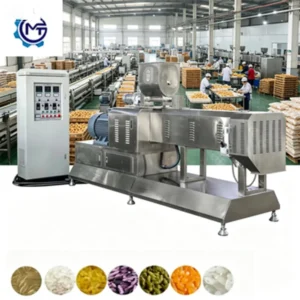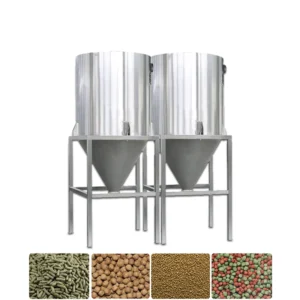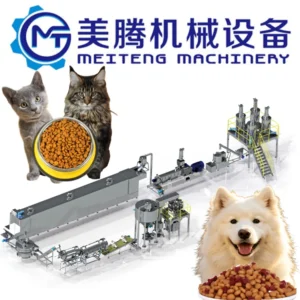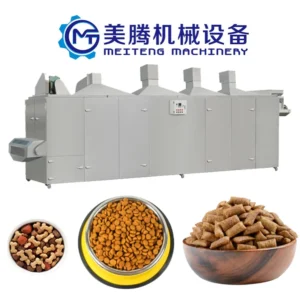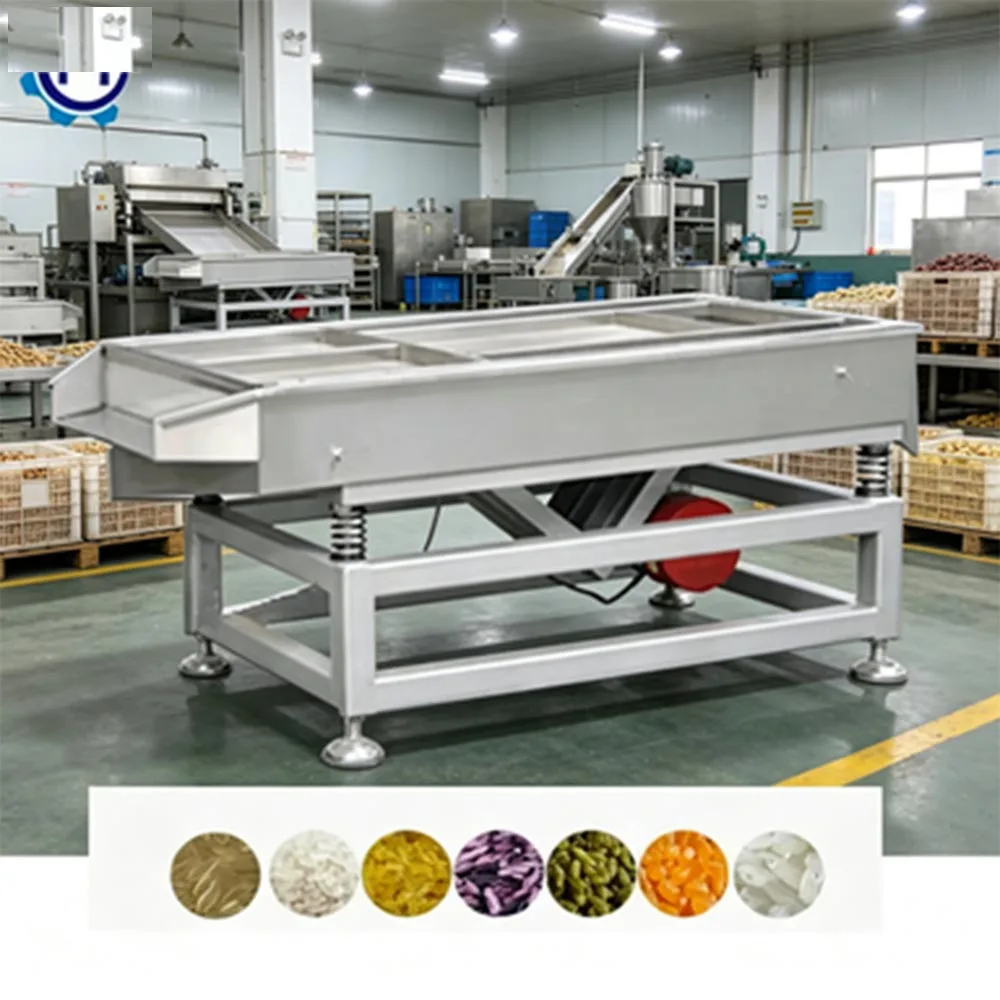
Throughput-Matched Line Design — Every station from raw material mixing to pellet coating is capacity-balanced under a single supplier, preventing the bottleneck effect that arises when extruders, dryers, and seasoners are sourced independently.
Technical Specifications
| Parameter | Value |
|---|---|
| Product Type | Twin Screw Aquatic Fish Feed Extrusion Production Line |
| Extruder Configuration | Twin screw, co-rotating |
| Control System | Intelligent PLC automatic control |
| Contact Material | Food-grade 304 stainless steel |
| Pellet Output | Floating and sinking fish feed pellets |
| Line Stations | Raw material mixer, twin screw extruder, dryer, seasoning/coating machine, vibrating sieve, conveyor equipment |
| Automation Level | Full continuous automatic production (mixing → extrusion → drying → seasoning → screening → discharging) |
| Output Capacity | Large-scale industrial continuous production (basis to be confirmed with raw material formulation and pellet size) |
| Pellet Adjustability | Size, hardness, and buoyancy adjustable via screw configuration and die selection |
| Raw Materials Supported | Fish meal, soybean meal, corn powder, compound additives |
| Transmission Design | Optimized energy-saving drivetrain |
| Maintenance Design | Quick replacement of vulnerable parts, convenient daily cleaning |
| Certification | CE (confirm specific line certification per order) |
Application Suitability
| Application | Material or Output |
|---|---|
| Floating feed for koi and ornamental fish | Fish meal, corn starch, wheat flour blends with high expansion ratio |
| Sinking pellets for catfish and tilapia | Soybean meal, fish meal, compound additives with controlled density |
| Shrimp and crustacean feed | Fine-particle protein blends requiring slow-sinking characteristics |
| Tropical fish micro-pellets | Corn powder and vitamin-fortified compound additives in small die formats |
What Your Quoted Capacity Number Actually Means on a Twin Screw Fish Feed Extruder Machine
A capacity figure without a raw material basis is a guess, not a guarantee.
When a twin screw fish feed extruder machine is quoted at a nominal output, that number typically assumes a generic corn-starch formulation at standard moisture content. Switch to a high-protein fish meal blend with different gelatinisation behaviour, and the actual throughput shifts — sometimes significantly. I worked on a project where an aquaculture line was specified on a universal template, and the floating pellets came out sinking while the sinking feed drifted to the surface. The density was entirely wrong for the buyer’s market specification, and weeks of raw material were wasted before the screw configuration was reworked. The output capacity of this line must be confirmed against your specific raw material blend, pellet diameter, and target moisture content before any commitment is made. [NEED_CITE: raw material moisture and protein content effect on extrusion throughput]
How Screw Geometry Controls Pellet Buoyancy
The twin screw extruder at the heart of this aquatic feed line uses interchangeable screw elements and die plates to control the shear, residence time, and expansion profile of the material. Floating pellets require high expansion — achieved through specific screw pitch sequences and barrel temperature zones that maximise starch gelatinisation before the material exits the die. Sinking pellets need the opposite: denser compression with controlled moisture release. The screw configuration is not a fixed component but a modular assembly that must be matched to your exact fish meal, soybean meal, and corn powder ratios to produce the correct buoyancy consistently across every production run.
Why the Dryer and Coater Must Match the Extruder
A twin screw fish feed extruder machine running at full output means nothing if the downstream dryer cannot remove moisture at the same rate. Undersized drying capacity causes pellet deformation, inconsistent hardness, and mould risk during storage. This production line addresses that by matching every station — mixer, extruder, dryer, seasoning drum, vibrating sieve — to a shared throughput target. The coating station applies fat or flavouring uniformly only when pellet surface temperature and feed rate are stable, which requires the dryer to deliver consistent output moisture. When each station is engineered as part of one system rather than assembled from separate vendors, the line runs continuously without manual intervention to compensate for bottlenecks. [NEED_CITE: continuous extrusion line throughput balancing principles]
Decoding the Specifications That Matter in Aquatic Feed Extrusion
The twin screw configuration provides self-wiping action between the two intermeshing screws, which is critical when processing sticky, high-protein fish meal blends that would accumulate on a single screw. Food-grade 304 stainless steel contact surfaces resist the corrosive salts and amino acids present in aquatic feed formulations, extending component life compared to carbon steel alternatives. The intelligent PLC automatic control system maintains barrel temperature profiles and screw speed within tight tolerances, ensuring batch-to-batch consistency in pellet density — the single most important quality parameter for floating versus sinking feed differentiation. The vibrating sieve downstream removes undersized and oversized pellets before packing, ensuring the final product meets the diameter specification that aquaculture operations expect for their specific fish species and life stage.
The Hidden Cost of Generic Screw and Die Selection
When screw elements and die plates are copied from a standard template rather than specified to your raw material, the consequences do not appear until production starts. Floating pellets that sink waste entire batches and damage market credibility. Pellets with inconsistent hardness cause feeding problems at fish farms — some dissolve too quickly, fouling water quality, while others resist mastication. The cost is not just the wasted raw material; it is the lost customer trust and the downtime spent reconfiguring a line that should have been correct from day one. [NEED_CITE: aquatic feed pellet density tolerance standards by species]
Why Source This Line Through a Single Integration Point
Every station in this twin screw fish feed extruder machine line — from the raw material mixer through the seasoning and coating drum to the vibrating sieve — is specified under one engineering responsibility, meaning throughput is balanced before the equipment ships rather than adjusted on your factory floor. The screw configuration and die design are selected based on your raw material formulation and target pellet buoyancy, not copied from a generic catalogue. An in-house testing workshop allows trial runs on your actual fish meal and corn powder blend before dispatch, so pellet density and moulding rate are verified before installation begins. Pre-sales consultation covers line layout, utility planning, and electrical schematic confirmation, and the process continues through on-site commissioning, operator training, and ongoing wear parts support.
Documentation & Verification
- Line layout drawing with throughput calculation matched to your pellet size and formulation
- Screw and die configuration record specified to your target buoyancy, not a generic template
- Trial run report on your fish meal and soybean meal blend before shipment
- Electrical schematic with voltage, frequency, and PLC language confirmed for your market
- Factory test record documenting pellet density, moulding rate, and surface finish
- CE declaration of conformity and ISO certificate documentation package
Installation, Commissioning & Support
- Foundation layout specifying load points for the twin screw extruder and dryer assembly
- Dedicated electrical circuit planning based on the confirmed PLC control system power draw
- Modular station delivery allowing phased assembly to match workshop access constraints
- First-run parameter setting for barrel temperature zones and screw speed on your raw material
- Operator training covering die changeover procedures for switching between floating and sinking formats
- Wear parts list with reorder intervals for screw elements, die plates, and dryer seals
What We Need to Configure Your Line Correctly
To move past generic specifications and size this twin screw fish feed extruder machine to your actual production requirements, share your raw material formulation including protein and starch percentages, your target pellet diameter range for each product format, and the daily output volume you need to sustain. Confirm your workshop voltage and frequency standard, the control panel language preference for your operators, and whether you require a pre-shipment trial run on your own raw material blend.
Frequently Asked Questions
Q: How is line output capacity verified against my specific fish feed formulation and pellet size?
A: The capacity is confirmed through a trial run using your actual raw material blend — fish meal, soybean meal, corn powder, and additives — in the testing workshop. Pellet output rate, buoyancy, and moulding percentage are documented in a test report before the quotation is finalised, ensuring the quoted figure reflects your formulation rather than a generic assumption.
Q: Can the same line produce both floating and sinking pellets, and how is the switch managed?
A: Yes. The twin screw extruder accommodates both formats by adjusting the screw element configuration, barrel temperature profile, and die plate selection. Switching between floating and sinking production involves replacing the screw combination and die, then recalibrating the PLC parameters — a procedure covered during operator training at commissioning.
Q: What voltage, frequency, and PLC language options are confirmed before shipment?
A: Electrical specifications including voltage, frequency, and phase are confirmed during the quotation stage based on your facility’s power supply. The PLC interface language is also agreed at that point, so the control panel is configured before the line ships rather than requiring on-site modification during commissioning.
Q: How are screw and die configurations selected for my raw material blend?
A: Screw elements and die plates are selected based on your specific protein content, starch ratio, and moisture level. The configuration targets the correct gelatinisation point and expansion ratio for your intended pellet buoyancy, and is documented in a configuration record that accompanies the shipment for future reference and reordering.
Q: What does the pre-shipment trial run in the testing workshop cover?
A: The trial run processes your supplied raw material through the full extrusion cycle, measuring pellet density, buoyancy, surface finish, and moulding rate. A written report with these results is provided before shipment, allowing you to verify that the line configuration produces pellets matching your market specification before the equipment leaves the factory.