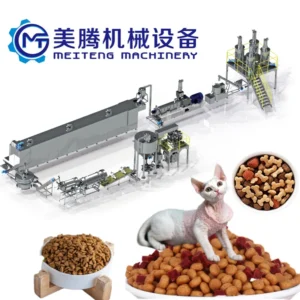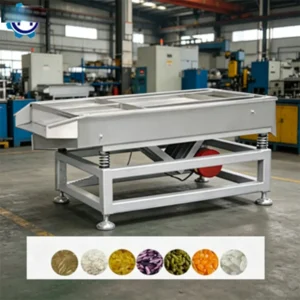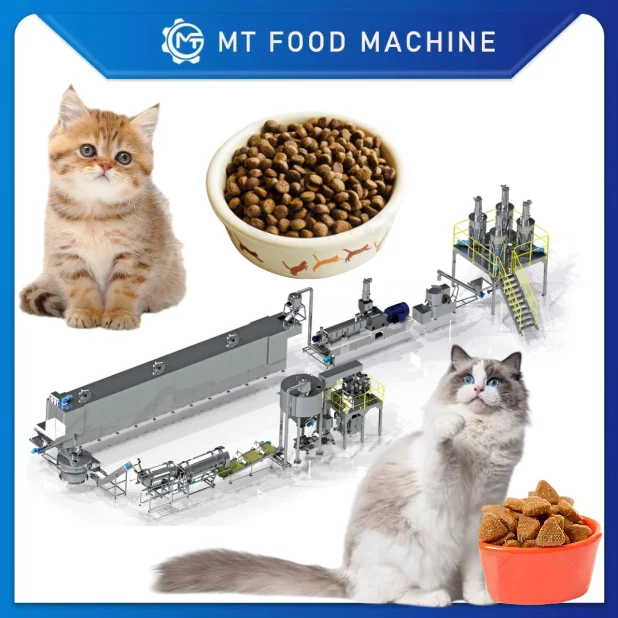
Fully Matched Stations — Every machine in the MT135 line is sized to the extruder’s actual throughput, so the dryer, flavouring drum and packer never become bottlenecks when you switch from corn-based kibble to high-meat formulations.
Technical Specifications
| Parameter | Value |
|---|---|
| Model | MT135 |
| Product Type | Multi-Species Pet Food Processing Line |
| Output Capacity | 2.5–3.0 t/h (basis not stated in source — confirm raw material formulation, moisture content and pellet size) |
| Alternative Output Capacity | up to 550 kg/h (basis not stated in source — confirm raw material, product format and line configuration) |
| Control System | PLC Controlled |
| Screw Type | Twin-screw |
| Line Stations | Batching, extrusion, drying, flavouring, coating, cooling, packing |
| Application Scope | Cat, dog, fish, bird, and cattle feed |
| Assembly State | Complete production line |
| Voltage & Frequency | Configurable to target market (confirm before order) |
| After-sales Support | Video technical support and online after-sales service |
| Certification | CE; ISO |
Application Suitability
| Application | Material or Output |
|---|---|
| Dry kibble for dogs and cats | Corn, meat meal, fish meal, poultry by-product, vitamin premix at varying moisture levels |
| Floating and sinking aquatic pellets | Fish meal, soybean meal, wheat flour, starch binders for catfish, tilapia and shrimp |
| Bird feed pellets | Millet, sorghum, sunflower meal, calcium carbonate |
| Cattle and livestock feed | Corn, barley, soybean meal, molasses, mineral premix |
| Core-filled or coated treats | Base extrudate with fat, yoghurt or flavour coating applied in rotating drum |
What "2.5–3.0 t/h" Leaves Out About Line Capacity
A capacity number means nothing until you know the formulation and pellet geometry it was measured on.
I have watched buyers sign off on a pet food making machine full equipment range based on a headline throughput figure, only to discover during commissioning that their high-fresh-meat recipe cuts actual output significantly. Corn flour at low moisture extrudes and dries fast; a 60 percent meat slurry does not behave the same way. The screw profile, barrel temperature zones and dryer residence time all shift, and suddenly the line runs well below the brochure number. That gap is not a defect — it is physics. The question you need answered before you commit is what formulation and pellet diameter the rated capacity was established on, and whether the dryer and cooler have enough belt length and airflow to keep up when your recipe demands more dwell time [NEED_CITE: factors affecting extruder throughput on high-protein formulations].
How Each Station Connects in the MT135 Layout
The MT135 is configured as a continuous chain where every station’s throughput is calculated against the extruder output. The batching and mixing system feeds the twin-screw extruder at a controlled rate, and the extruded product moves through a multi-pass dryer before entering the flavouring and coating drums. A pet food making machine full equipment range only performs as well as its weakest link, so the cooling conveyor and packing scale are sized to the same hourly volume. When one vendor supplies the entire chain, you avoid the mismatch that occurs when a dryer from supplier A cannot handle the moisture load coming from an extruder built by supplier B.
Multi-Species Versatility Through Screw and Die Changes
A single MT135 line can produce dense sinking pellets for aquaculture, light floating kibble for dogs, and fine crumbles for bird feed by swapping screw elements and die plates. The twin-screw configuration allows operators to adjust shear, residence time and compression ratio without replacing the entire barrel assembly. This flexibility matters for contract manufacturers who run short batches of different species feed on the same shift. The PLC stores recipes for each product format, so barrel temperature zones and screw speed return to the correct profile at the push of a button [NEED_CITE: twin-screw extrusion screw configuration for varying feed densities].
Reading the Specs That Actually Matter
The PLC control system is the backbone of batch-to-batch consistency on a line running multiple species formulations. Each barrel zone has an independent thermocouple and heating element, so temperature profiles can be saved per recipe rather than adjusted manually between runs. The twin-screw design gives operators more variables — screw pitch, kneading block arrangement, reverse-flight sections — to tune expansion and density. When you evaluate a pet food making machine full equipment range, look past the headline tonnage and ask for the screw configuration record that matches your specific raw material. A line rated at high throughput on standard corn grits may need a completely different screw profile to hold that output on a premium recipe with high fat and protein content.
The Cost of Ignoring Downstream Equipment Sizing
Buyers who focus only on the extruder often discover during the first production week that the dryer cannot remove enough moisture from high-protein pellets in the available belt length. Product leaves the dryer above the safe storage moisture threshold, leading to mould in packed bags within days. I have seen entire production batches scrapped because the cooling conveyor was too short to bring pellet surface temperature down before packing, causing condensation inside sealed bags [NEED_CITE: moisture and temperature thresholds for safe pet food storage]. The flavouring drum may also be undersized, meaning coating coverage is uneven and the final product does not meet the palatability standard the brand promised. These are not extruder problems — they are line integration failures that only surface when the equipment is running your actual formulation under real conditions.
Why Buyers Specifying Full Lines Start Here
The MT135 is offered as a complete equipment set rather than a standalone extruder, which means throughput calculations cover every station from the batching scale to the packing conveyor. Screw configuration and die design are specified to the buyer’s raw material and target pellet density before the machine is built, not copied from a generic template. The manufacturer operates an in-house testing workshop where trial runs on customer-supplied raw material take place before shipment, so expansion, density and colour are verified in advance. A pet food making machine full equipment range sourced from one supplier eliminates the finger-pointing that happens when separate vendors blame each other for a throughput gap. Pre-sales engineering covers line layout, utility planning and voltage confirmation, and the same team handles installation and commissioning on site.
Documentation & Verification
- Line layout drawing showing station spacing and throughput calculation for your target formulation
- Screw and die configuration record matched to your raw material and pellet density spec
- Electrical schematic with voltage and frequency confirmed against your facility supply
- Trial run report from in-house testing workshop using your actual raw material batch
- CE declaration of conformity and ISO certificate applicable to the complete line
- Operation and maintenance manual covering every station with wear parts list
Installation, Commissioning & Support
- Foundation plan and floor load data provided before equipment arrives, based on the full MT135 line weight and footprint
- Dedicated power circuit requirements confirmed per the line’s total connected kW and your local voltage
- Complete line arrives in sectioned modules for staged assembly, reducing workshop downtime during installation
- PLC parameter upload and recipe storage configured on site during first-run commissioning with your formulation
- Operator training covers screw changes, die swaps and PLC recipe selection across all species formats
- Wear parts list for screws, dies and dryer belts with recommended reorder intervals included at handover
What to Share Before Requesting a Quote
To get an accurate line configuration, start with your raw material list including protein, fat and moisture percentages for each recipe. Specify the target pellet diameter and whether you need floating, sinking or semi-moist formats. Share your local voltage and frequency so the electrical package is built correctly from the start, and confirm the control interface language your operators will use. If you already have upstream milling or downstream packing equipment, provide the model and throughput so the MT135 can be matched at the connection points.
Frequently Asked Questions
Q: How is the stated output capacity verified, and what formulation is it based on?
A: The capacity figure must be confirmed against your specific raw material formulation, moisture content and target pellet size. Request the trial run report from the in-house testing workshop, which documents actual throughput on your recipe rather than a generic corn-flour benchmark. This is the only way to verify what the line will produce under your conditions.
Q: Which supporting stations are included, and how is throughput balanced?
A: The line covers batching, extrusion, drying, flavouring, coating, cooling and packing as one matched set. Throughput at every station is calculated against the extruder output so that the dryer belt length, flavouring drum volume and packing scale speed all align. This prevents the downstream bottleneck that occurs when equipment is sourced from separate vendors.
Q: How do I choose the right screw configuration for my formulation?
A: Screw element arrangement — pitch, kneading blocks, reverse flights — is specified based on your raw material composition and target pellet density. The manufacturer provides a configuration record before production and validates it during the pre-shipment trial run. Adjustments are made in the testing workshop, not on your factory floor during commissioning.
Q: Can I run a trial on my own raw material before the line ships?
A: Yes. The manufacturer operates an in-house testing workshop where your raw material is extruded, dried and coated under production conditions. You receive a trial report documenting expansion ratio, pellet density, colour and actual throughput before you approve shipment.
Q: What electrical and control options should I confirm before ordering?
A: Confirm your facility voltage, frequency and phase, the control interface language your operators need, and whether your local standards require specific safety interlocks. These details are locked in during the specification stage so the PLC cabinet and motor drives are built for your market from the start.