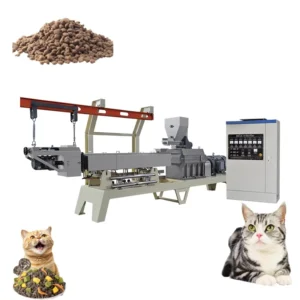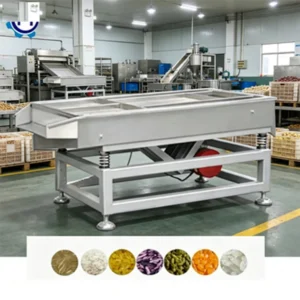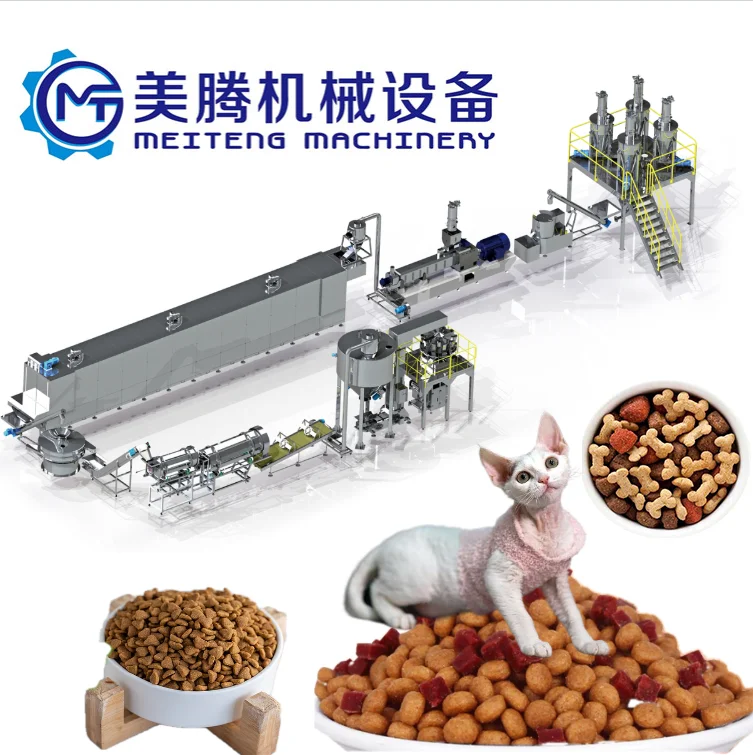
Integrated line engineering — Every station from mixing through packaging is throughput-matched under one build responsibility, eliminating the cross-vendor bottlenecks that fragment output on the MT70 pet food processing line full equipment range.
Technical Specifications
| Parameter | Value |
|---|---|
| Model | MT70 |
| Product Type | Pet Food Extrusion Processing Line |
| Output Capacity | 100–200 kg/h (basis not stated in source — confirm raw material type, moisture content, and kibble size) |
| Voltage & Frequency | 380V 50Hz Three Phase |
| Control System | PLC and MCC automated control |
| Screw Type | Twin-screw |
| Line Stations | Mixing → Extrusion → Drying → Packaging |
| Food Contact Materials | Food-grade throughout all processing stations |
| Assembly State | Complete line, modular components |
| Standards | CE, FDA, ISO |
Application Suitability
| Application | Material or Output |
|---|---|
| Dry kibble production | Corn meal, meat and bone meal, poultry by-product blends, grain-based formulations |
| Semi-moist pet food | High-moisture meat slurries combined with starch binders |
| Pet treats and dental chews | Gelatin-based doughs, rawhide alternatives, starch-protein matrices |
| Prescription and functional diets | Premixed vitamin and mineral powders integrated into extruded kibble carriers |
Why Matching Dryer Capacity to Extruder Output Matters Before You Sign
A pet food processing line full equipment range only holds its rated output when every downstream station can absorb the extruder’s actual discharge rate.
I once watched a line in a humid coastal plant where the extruder ran at full screw speed but the dryer could not pull enough moisture from the kibble bed. The result was a pile of soft, under-dried product backing up at the cooler inlet. The dryer vendor blamed the extruder vendor, and the extruder vendor blamed the recipe. Neither had calculated the real moisture load together. That gap between stations is where capacity numbers quietly disappear from the floor. [NEED_CITE: typical moisture removal rates required between twin-screw extruders and belt dryers in kibble production]
Station-to-Station Throughput Alignment
Every station in the pet food processing line full equipment range is specified against the same throughput target. The mixer batch cycle is timed so that the extruder hopper never starves, and the dryer belt width and residence length are calculated from the extruder’s actual discharge moisture. This removes the guesswork that arises when equipment is sourced from separate catalogs and bolted together on site.
Screw Configuration Tied to Your Raw Material
The twin-screw assembly is not a default build. Screw element sequence — forwarding flights, kneading blocks, and reverse elements — is arranged based on the buyer’s actual flour, meal, or slurry composition. Die plate aperture count and land length are then matched to the target kibble density, whether the market calls for a slow-sinking veterinary diet or a highly expanded economy kibble. [NEED_CITE: influence of screw element sequencing on expansion ratio and bulk density in twin-screw extrusion]
Reading the Spec Sheet Beyond the Headline Number
The 100–200 kg/h output range sits on a specific set of conditions: raw material type, incoming moisture, and target kibble diameter. A low-fat, high-starch recipe may push toward the upper end, while a formulation loaded with fresh meat slurry and bone meal will shift output downward and demand a different screw profile. Voltage at 380V 50Hz three-phase suits many export markets, but frequency mismatches will alter motor speed and screw RPM. Always confirm local supply before the motor is wired. PLC and MCC control across the full line keeps recipe parameters — barrel zone temperatures, screw speed, feeder rate, dryer belt speed — locked in a single interface, reducing batch-to-batch drift.
The Hidden Cost of Skipping the Trial Run
When an extruder ships without a documented test on the buyer’s actual raw material, the first production run becomes the trial. Screw elements may need reshuffling, die plates swapping, or dryer belt speed recalibrating — all while the line is installed, the commissioning engineer is on site, and the launch deadline is burning. I saw exactly this happen on a shipment to Mexico: the standard corn-flour test went perfectly, but the customer’s chicken-and-bone-meal recipe produced kibbles that were too dense and under-expanded. Half a month was lost reconfiguring the screw stack in the field. That is why the in-house testing workshop exists — to surface those surprises before the crate is nailed shut. [NEED_CITE: common causes of extrusion line commissioning delays related to raw material variation]
Why Procurement Converges Here
The pet food processing line full equipment range is engineered as a single responsibility chain: mixing, extrusion, drying, and packaging under one supplier, so throughput accountability does not fracture across vendors. Screw and die configurations are recorded against the buyer’s specific formula, not copied from a generic template. Every line passes through the in-house testing workshop for a trial run on the customer’s own raw material before dispatch, generating a test report the buyer can review prior to shipment. Food-grade contact materials run through all stations, meeting the hygiene expectations of export markets that audit supply chains. CE and ISO documentation travels with the machine, supporting customs clearance and local regulatory registration without last-minute scrambles.
Documentation & Verification
- Line layout drawing with station-by-station throughput calculation for the MT70 configuration
- Screw element sequence and die plate record matched to your raw material formula
- Trial run report on customer-supplied raw material from the in-house testing workshop
- Electrical schematic confirming 380V 50Hz three-phase wiring and PLC I/O map
- CE declaration of conformity and ISO certificate for customs and local registration
- Operation and maintenance manual with wear parts list for screws, dies, and seals
Installation, Commissioning & Support
- Foundation plan sized to the MT70 modular footprint, confirming load-bearing requirements per station
- Dedicated 380V 50Hz three-phase circuit with breaker rating matched to total line rated power
- Modular station delivery allowing phased assembly where ceiling height restricts full-line rigging
- First-start parameter upload — barrel zone temperatures, screw RPM, dryer belt speed — from trial run data
- Operator training on PLC recipe recall and MCC safety interlocks before the commissioning engineer departs
- Initial spare set of screw elements and die plates shipped with the line to cover the first wear cycle
What to Prepare Before Requesting a Quote
Share your target kibble type, the raw material formulation including protein and fat percentages, and the incoming moisture range of your dry and wet ingredients. Specify your local voltage, frequency, and preferred HMI language so the control cabinet is built correctly the first time. If you have existing upstream grinders or downstream packaging equipment, list their capacities so the MT70 pet food processing line full equipment range can be matched to your current flow rather than sized in isolation.
Frequently Asked Questions
Q: What supporting stations are included in the MT70 line and how is throughput matched?
A: The line covers mixing, twin-screw extrusion, drying, and packaging as one integrated system. Each station is sized against the same throughput target so the extruder’s discharge rate is fully absorbed by the dryer belt and cooler capacity, preventing the bottlenecks that occur when stations are sourced from separate vendors.
Q: How are screw configuration and die design selected for different kibble densities?
A: Screw element sequence and die plate geometry are specified after reviewing the buyer’s raw material composition and target kibble density. A trial run in the in-house testing workshop validates the configuration before shipment, and the screw and die record is documented for future reorder or formula adjustment.
Q: What voltage, frequency, and control language options are confirmed before shipment?
A: The standard configuration is 380V 50Hz three-phase with PLC and MCC control. Buyers must confirm their facility voltage and frequency before the electrical cabinet is wired, and HMI language preference is locked during the specification stage to avoid on-site reprogramming delays.
Q: How does the in-house trial run on customer raw material work?
A: The buyer ships a representative sample of their actual formula to the testing workshop. The line runs the material through the full extrusion and drying sequence, and a test report documenting expansion ratio, kibble density, and moisture content is provided before the machine is crated for shipment.
Q: What spare wear parts should be included in the first order?
A: The recommended first-order set includes a replacement screw element kit, extra die plates for the primary kibble shape, and barrel liner seals. Quantities are listed in the wear parts schedule shipped with the documentation package, sized to cover typical running hours before the first scheduled maintenance window.