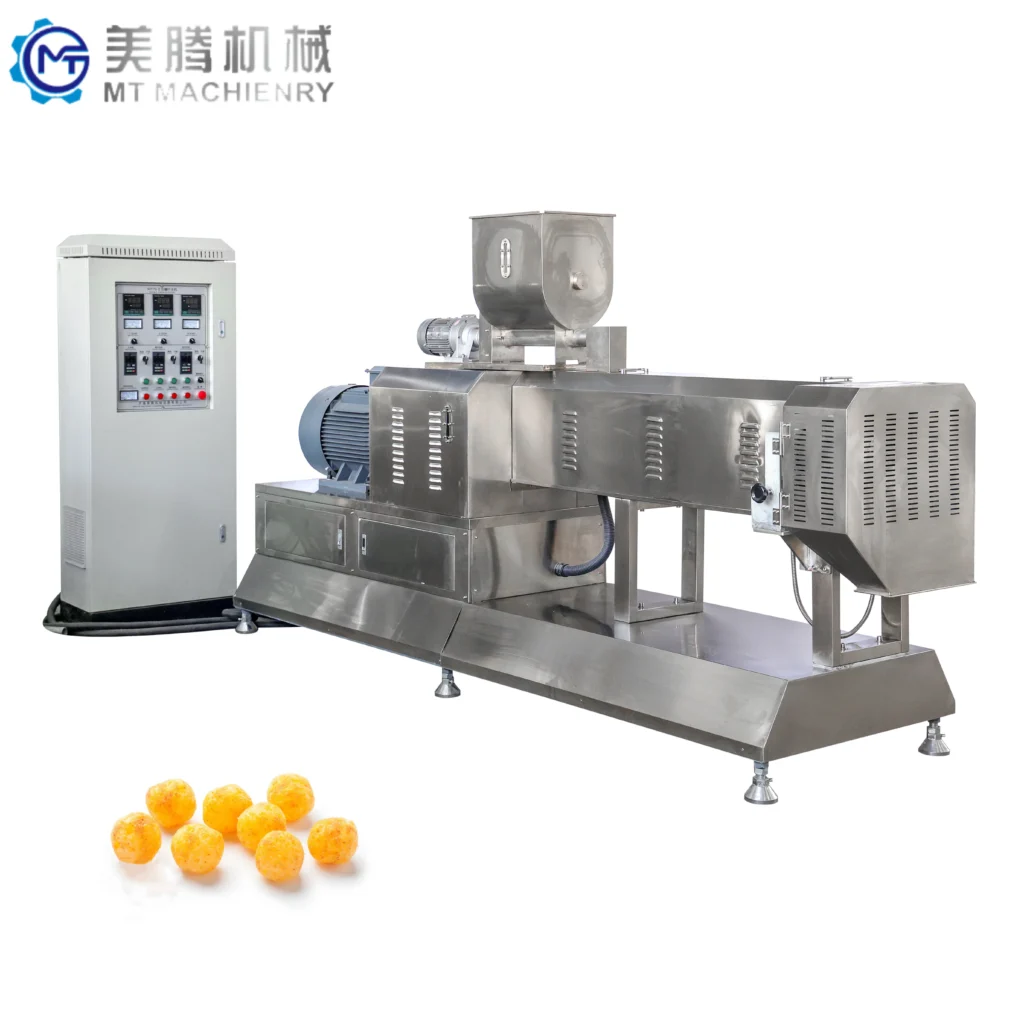
Integrated Downstream Matching — Every station in this snack food extrusion line full equipment range is sized against the extruder’s real output rather than ordered as standalone units, preventing dryer or flavoring bottlenecks that stall production.
Technical Specifications
| Parameter | Value |
|---|---|
| Product Type | Puffed Snack Food Extrusion Line |
| Extruder Models Available | MT65 / MT70 / MT85 / MT100 |
| Screw Configuration | Twin-screw |
| Installed Power | 130 kW (MT65) / 180 kW (MT70) / 220 kW (MT85) / 240 kW (MT100) |
| Real Consumption | 95 kW (MT65) / 120 kW (MT70) / 130 kW (MT85) / 160 kW (MT100) |
| Capacity Range | 120–150 kg/h (MT65) / 200–300 kg/h (MT70) / 300–500 kg/h (MT85) / 600–800 kg/h (MT100) (basis not stated in source — confirm raw material, moisture content, die configuration) |
| Control System | Frequency speed controlling system with high automation |
| Barrel System | Automatic lubricating and cooling system |
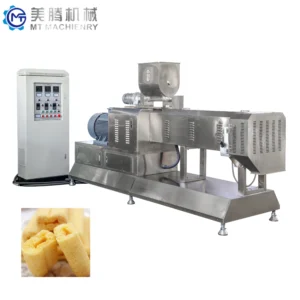
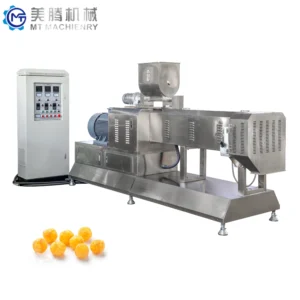
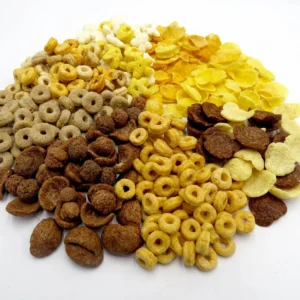
| Die Configuration | Interchangeable dies for ball, tube, stick, ring, fruit loop, star, wheel, flower, heart shapes |
| Dryer Heating Source Options | Electric / Steam / Gas (customizable to local conditions) |
| Flavoring System | Double drum flavoring line with sugar melting and spraying nozzle |
| Packing Machine | Automatic weighing, sealing, marking, coding; vibration feeding with electronic pad weighing |
| Core Filling Option | Available with added core filling machine and cutting machine |
| Assembly State | Turnkey complete line |
Application Suitability
| Application | Material or Output |
|---|---|
| Cheese ball and ring production | Corn flour, rice flour blends with flavoring coatings |
| Breakfast cereal loops and stars | Wheat, oat, and barley flour mixtures |
| Core-filled snack pillows | Grain-based outer shell with cream or chocolate filling |
| Tube and stick snacks | Corn grits and multi-grain formulations |
| Fortified puffed snacks | Blends incorporating vitamin-mineral premix |
| Fruit loop and wheel formats | Multi-colored grain dough requiring segmented extrusion |
What "Line Capacity" Leaves Out When Stations Are Mismatched
A rated extruder output means nothing if the dryer downstream cannot hold that volume at the required moisture reduction.
I have walked into facilities where the extruder was running at full throughput while the dryer forced the line to half speed because its evaporation rate was calculated for a different product profile. Puffed snacks exit the die at high moisture and must be brought down steadily; if the dryer is undersized, product backs up, texture degrades, and operators start cycling the extruder on and off. This snack food extrusion line full equipment range addresses that mismatch by pairing each extruder model with a dryer, flavoring drum, and packing station whose throughput ratings align with the extruder’s actual consumption figures rather than its nameplate peak [NEED_CITE: thermal evaporation rate calculation for continuous food dryers].
Station-by-Station Equipment Breakdown
The line begins with a mixing and batching station sized to feed the selected extruder model continuously, avoiding batch starvation that causes density fluctuation in the final product. Material then moves through the twin-screw extruder where the interchangeable die system allows shape changes without swapping the entire barrel assembly. Operators can run cheese balls in the morning shift and switch to tubes or fruit loops by changing the die plate and adjusting the cutter position, keeping changeover time manageable within a single production day.
Downstream Matching That Prevents Bottlenecks
After extrusion, the drying stage must reduce moisture to the level the market expects for shelf stability and crunch texture. The dryer in this snack food extrusion line full equipment range offers selectable heating sources — electric, steam, or gas — so buyers can match their local utility costs and infrastructure. Once dried, product enters the double drum flavoring line where sugar melting and spray nozzles apply coating evenly; the drum diameter and rotation speed are matched to the extruder throughput so product does not pile up or tumble too aggressively, which would break fragile shapes [NEED_CITE: coating uniformity standards for puffed snack products].
Screw Configuration and Die Selection for Real Formulations
Twin-screw extrusion gives operators a wider processing window than single-screw machines when working with multi-grain blends that contain varying starch and fiber ratios. The screw elements can be rearranged along the shaft to adjust shear intensity and residence time, which directly affects expansion ratio and internal cell structure. A high-fiber formulation requires a different screw profile than pure corn flour to achieve the same puff volume, and the die orifice diameter determines wall thickness for hollow shapes like tubes and rings. The automatic lubricating and cooling system on the barrel maintains temperature zones across multiple heating sections, which is necessary because different snack formats demand different thermal profiles from feed zone to die face.
The Cost of Skipping Voltage and Utility Confirmation
I once saw a line shipped to a facility running on a different frequency standard than the motors were wound for. The extruder ran, but the dryer fan motor overheated within the first week, and the packing machine’s electronic weigher gave inconsistent readings because the control board expected a different input cycle. These problems do not show up in a factory acceptance test when the machines are running on the manufacturer’s local power supply [NEED_CITE: industrial motor frequency compatibility requirements]. Confirming voltage, phase configuration, and frequency before production begins avoids weeks of commissioning delay and replacement part shipments that could have been a five-minute conversation during the quotation stage.
Why Source the Full Equipment Range From One Supplier
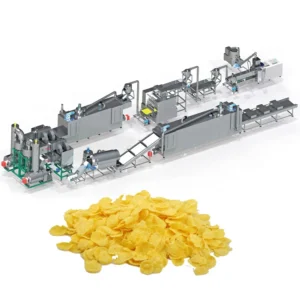
When every station comes from the same engineering team, throughput calculations are cross-checked before metal is cut rather than reconciled on the factory floor during installation. The line layout document shows material flow between each machine with belt widths, conveyor speeds, and buffer capacities that match the selected extruder model. Screw and die configurations are specified against the buyer’s actual raw material formulation and tested in the workshop before the line ships, not left for the buyer to develop alone after installation. The frequency speed controlling system communicates across stations so a speed adjustment at the extruder propagates to the dryer belt and flavoring drum without manual intervention. Documentation packages include electrical schematics confirmed against the target market’s standards, not generic drawings that leave voltage assumptions to the installer. CE certification covers the complete assembly, meaning safety interlocks and guarding are designed as a coordinated system rather than bolted on afterward by different vendors interpreting different standards.
Documentation & Verification
- Line layout drawing showing throughput matching calculations between extruder, dryer, and flavoring stations
- Machine specification sheet per model listing installed power versus real consumption under production load
- Screw and die configuration record documenting element arrangement for the buyer’s specific raw material
- Electrical schematic with voltage and frequency confirmed for the destination market before manufacturing
- Trial run report produced on the buyer’s actual formulation in the testing workshop before shipment
Installation, Commissioning & Support
- Floor plan review accounting for the selected extruder model’s footprint plus dryer length and cooling conveyor clearance
- Dedicated electrical circuit sized to the line’s total real consumption figure with voltage and phase matching local supply
- Modular station assembly allowing staged installation from batching through packing within the facility’s available ceiling height
- First-run parameter setting covering barrel zone temperatures, screw speed, and die pressure for the target product shape
- Operator training on die changeover procedure and screw element rearrangement for different formulations
- Wear parts inventory including spare screw elements, die plates, and dryer belt sections for initial production months
Inquiry Preparation
Before requesting a quotation, prepare your raw material formulation including the percentage breakdown of grain flours, fiber content, and any added ingredients like sugar or fat that affect extrusion behavior. Confirm your facility’s electrical supply voltage, phase, and frequency so motors and control panels are built to match. Provide your available floor space dimensions and ceiling height so the line layout can be configured with proper conveyor runs and dryer length for your target moisture reduction. Specify the product shapes you plan to run and the daily production target so the correct extruder model and downstream station sizes are selected from the range.
Frequently Asked Questions
Q: How do I choose between MT65, MT70, MT85, and MT100 extruder models?
A: Model selection depends on your target hourly output and the product format you plan to run. Higher-capacity models require proportionally larger dryers and flavoring drums to avoid downstream bottlenecks. We match each station based on the extruder’s real consumption figure and your specific formulation, not just the nameplate capacity number.
Q: What supporting stations are included in the complete line?
A: The line covers mixing and batching, extrusion, drying, double drum flavoring with sugar melting, cooling, automatic weighing and packing, and stacking. Each station’s throughput is calculated to match the selected extruder model so material flows continuously without accumulation points or forced speed reductions.
Q: How does die changeover affect production scheduling?
A: The interchangeable die system allows shape changes — from balls to tubes to rings — by swapping the die plate and adjusting the cutter. Changeover time depends on operator familiarity and whether the new shape requires a different screw configuration. We provide configuration records for each shape so setup is repeatable.
Q: How is the dryer heating source determined?
A: Buyers select from electric, steam, or gas heating based on their facility’s available utilities and local energy costs. Gas heating is common where natural gas infrastructure exists, while electric heating suits smaller lines or locations without gas supply. The choice affects operating cost and must be confirmed before the dryer is built.
Q: What documentation ships with each line?
A: Documentation includes the matched line layout, per-model specification sheets, screw and die configuration records, electrical schematics with confirmed voltage, trial run reports on your formulation, and operation manuals covering changeover procedures and maintenance schedules for every station in the range.